Wednesday, September 9, 2020

Safety is a state of mind...


The summer is over and, looking back, we didn’t do many of the things we normally do here at the lake. We didn’t have indoor get togethers – this year we kayaked on the lake instead because that was an outdoor activity that naturally kept us appropriately distanced. We didn’t play card games or work on puzzles together, but we took hikes and kept our distances there too. At the beginning of the summer, everyone was cautious and wondering if being here together was possible - the alternative activities we came up with were creative and safe: just because we couldn’t do some things that weren’t naturally safe forced us to find others that were.  We didn’t take unnecessary risks, but we still had fun. I see that this past weekend there were lots of large gatherings around the country: the worst of them were massive parties without any precautions while the best included appropriate masks and distancing. It’s not that difficult to find appropriate solutions when we all put our heads together. Whether it’s summer fun or being back in school or at work, we are all in control of the things we can and can’t do; think safe, play safe, and be safe. That’s the best we can do today.


Timothy Ferriss (born 1977): American entrepreneur, investor, author, and podcaster

Tuesday, September 8, 2020

Trust me...


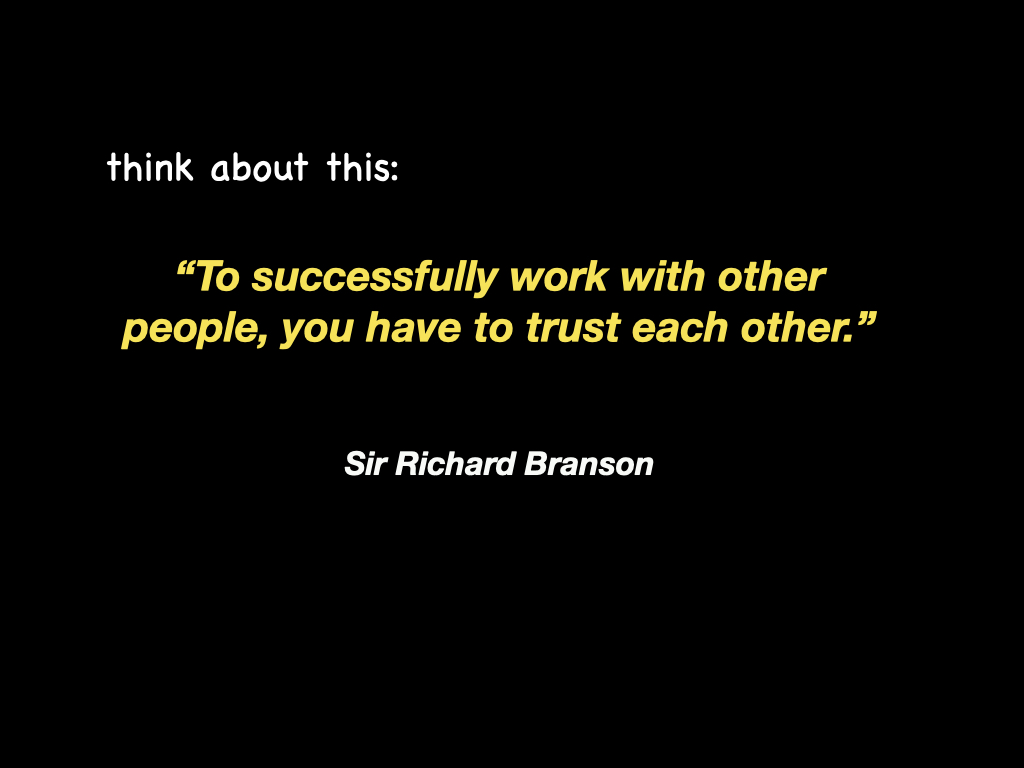
Business leaders have been challenged during this pandemic to get people to complete their work wherever they are, without supervision. Throughout my career in the gaming business, we were challenged when we our employees were on their own at the moment of service – mostly out of sight and beyond a supervisor’s direct control. The solutions in both of those situations are similar. Pick the right people for the job, clearly explain what’s expected of them, provide training and coaching to hone their competencies, make sure your instructions and expectations are clear, maintain open two-way communications, have proper methods to measure their work, give lots of feedback, and create a trusting workplace where all of these can flourish. The best companies are those where employees trust their leaders and the leaders trust them: that’s nurtured when people treat each other the way they want to be treated, clearly and demonstratively care about each other, and remain flexible in the face of changing and challenging circumstances. This is true in good times and bad, especially now as people continue to work from home during this pandemic. Of all the skills needed to be a effective leader, building and maintaining trust is at the top of the list.  Create a trusting workplace today.


Sir Richard Branson (born 1950): English business magnate, investor, author and philanthropist

Monday, September 7, 2020

Happy Labor Day...


Today is Labor Day, the long weekend and holiday that traditionally marks the end of Summer: schools and businesses are closed, and people usually have picnics and family outings. This year’s celebrations may be muted due to Covid-19, but if college campuses and public beaches are any indication, people are looking to play, have fun and enjoy their freedom. Can’t blame them since the pandemic-related restrictions have limited these kinds of activities. But what if you tried to bring some of this fun into the workplace? While it can be complicated, managers who have people working from home or in re-configured workspaces can find ways to make work fun.  It starts with your attitude: lighten up, be empathetic and supportive, and ask your employees to suggest ways to have fun in and around work – break up the work day like they do with kids in school, encourage employees to get up, walk around, and socialize safely; have actual or virtual potluck events; and start book or recipe or other kinds of clubs that employees can participate in safely. Get your employees engaged in finding ways to lighten up your workplace today.


Rasheed Ogunlaru (born 1970): British life, business and corporate coach

Friday, September 4, 2020

"The times they are a-changin"...


My wife made another great meal last night and, when I thanked her effusively, she reminded me that it was dinner #171 since we entered our Covid-19 bubble. Having not kept close count of the days, this was a sobering reminder about how long we’ve been plowing through this pandemic. Back when it started, there was optimism that the closures and restrictions would be short-lived; it’s been anything but, and not clearly knowing when it might end may be this year’s definition of “uncertainty”, a condition that, like I wrote yesterday, can lead to worry, pessimism, stress, burnout and depression. We think about employees working from home 5 days a week but, in reality, they’re home every day and, like my wife, are increasingly tired of this seemingly unending routine. As a leader, be aware that this collision of work and life has probably upset the balance that people achieved, in varying degrees, before this pandemic started, be sensitive to how they might be struggling to re-set that balance, and think how your actions (assignments and Zoom meetings) and your company’s policies (wages, attendance and time off) affect their efforts. Be mindful how Covid-19 is changing the way people work and the challenges they face today.


Greg Kincaid (born 1957): American author, best known for the best-selling book series, A Dog Named Christmas.

Thursday, September 3, 2020

"Don't stand in the doorway, don't block up the halls"...


As this pandemic drags on, it's increasingly affecting the mental health of those working from home. Surveys are beginning to show that a growing number of those in this situation are tired, stressed, burned out, discouraged, distracted, and depressed. In yesterday’s message, I talked about the need for leaders to be resilient and compassionate: to those I am suggesting they’re also going to have to be more empathic when dealing with these growing mental health issues, all of which can affect an employee’s personal as well as the organization’s overall performance. Leaders need to step up and start doing the things that will deal with these issues, like being mindful of your employee’s issues and needs, being flexible when scheduling work and meetings, creating a safe environment where people feel a sense of belonging, being understanding and adapting when unique circumstances arise, making sure people are receiving the information they need, when they need it, and talking openly about how all of this may be affecting you. Covid-19 may be a turning point in workplace mental health and the best leaders are being part of the solution, not the problem. Stand up and actively deal with the issues your employees are facing today.


Nikos Kazantzakis (1883 – 1957): Greek writer who was nominated for the Nobel Prize in Literature nine times

Wednesday, September 2, 2020

"Keep your eyes wide, the chance won't come again"...


I recently read an article about the need for managers to be both resilient and compassionate. There’s been a lot written in the past 6 months about the resilience expected from managers – adapting everything to keep up with the continually changing pandemic landscape: closing, working from home, planning reopening, changing everything to meet demands and expectations, adjusting for volatile business levels, ordering furloughs, identifying new-normal realities, and agonizing about layoffs.  All that resilience can be tiring, frustrating, and mostly unfulfilling… for the leader and those being led. In the midst of that is the need for compassion – not just bouncing back but helping others understand and deal with the changes that are inevitable. Managers used to refer troubled employees to Employee Assistance Programs; now they’re on the front line with employees and trying to help them cope with all that’s going on: they weren’t trained for this and often told not to go there. Traditionally, employee assistance programs were used by a relatively small number of employees; today, everyone’s affected by and suffering from the effects of this pandemic. It’s hard enough going thru this alone; harder yet to go thru it with others. Keep your eyes open for the chance to be considerate and supportive of people’s feelings and tribulations today.


Mary Kay Ash (1908-2001): American Entrepreneur and Founder of Mary Kay Cosmetics (resilience and compassion)

Tuesday, September 1, 2020

"You better start swimmin' or you'll sink like a stone"...


I opened up one of my news feeds yesterday and saw: The University of Alabama reports more than 1,200 students have tested positive for COVID-19; India sets record for new cases per day at more than 78,000; total US cases at 6 million as of this morning, with 183,068 deaths. I’m living in a bubble here in the Adirondacks where there’ve been fewer cases than just about anywhere, passionately doing all I can to stay safe and sane and hoping the rest of the world takes the most basic precautions to protect themselves and others.  But then I read this, and it burned a hole in my hope. A lot of people who live in this area year round are skeptical because there’ve been so few cases of the virus here, but they all are wearing masks, just in case.  So, add ‘just in case’ to all the other good reasons to wear a mask, keep your distance, and wash your hands. I don’t know if any of the stories (above) might have been changed had people followed these safety practices, but it makes me wonder. Stay safe and hope for better stories today.


Jesmyn Ward (born 1977): American novelist, associate professor of English, and winner of the 2011 National Book Award for Fiction

Clarity + Alignment = Loyal, High Performing Employees 🔗🎯🚀

L oyalty isn’t about liking the plan — it’s about rowing in the same damn direction. Supporting something is just as important as liking it....